
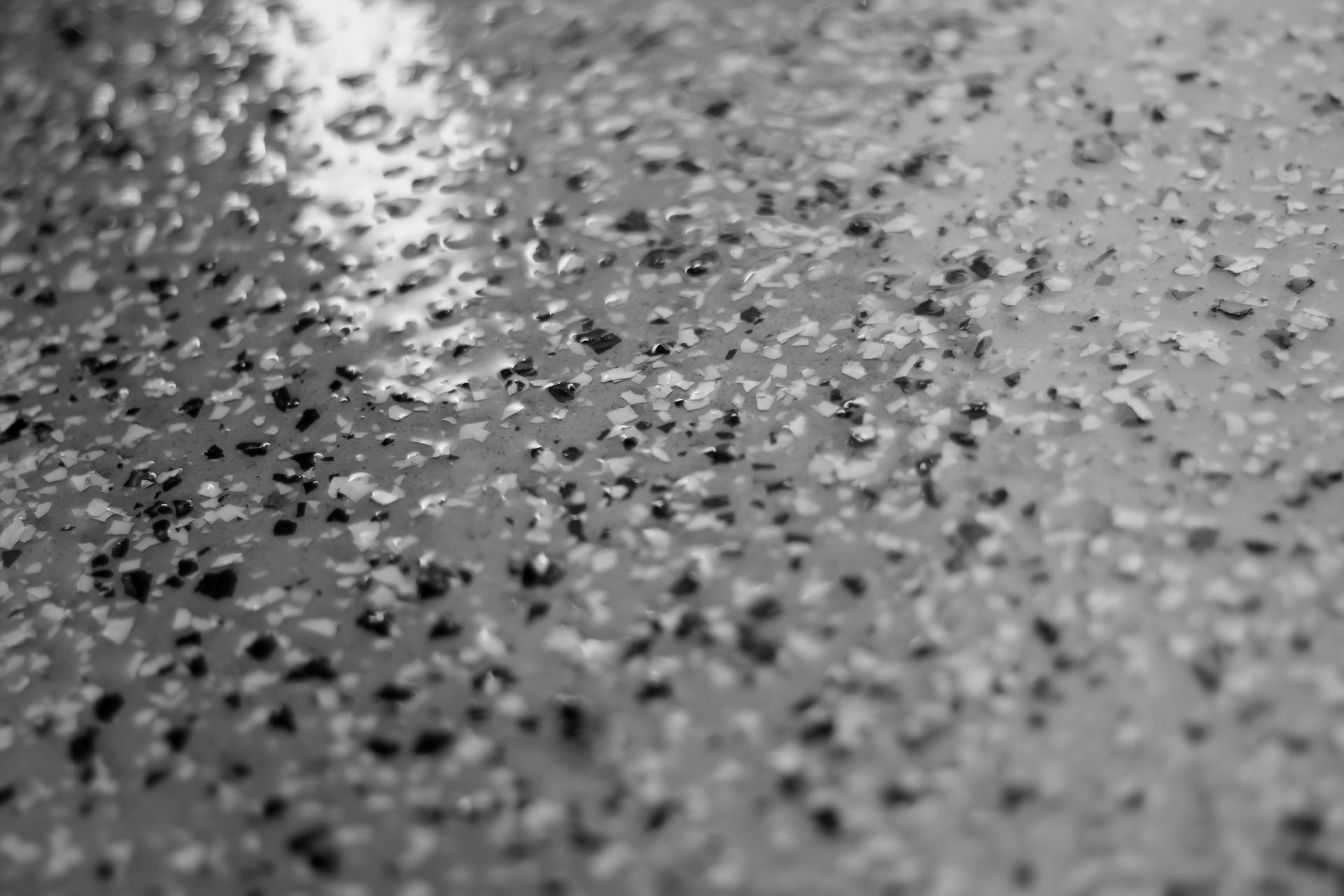
Garage Floors That Seal Against Dust and Moisture
Epoxy Flooring Installation in Cottonwood Heights for garages and basements enduring temperature swings and concrete moisture
Utah garages endure dust infiltration and temperature swings that cause bare concrete to deteriorate, absorb stains, and generate dust as the surface breaks down under traffic and environmental stress. Epoxy flooring seals concrete against moisture, creates a wipeable surface that resists oil and chemical staining, and produces a durable industrial finish that handles vehicle traffic without chipping or peeling. East Bench Painting installs epoxy flooring for garages, basements, and commercial spaces through concrete prep, epoxy application, and curing protocol, extending specialized coating application beyond paint to floor systems designed for high-wear environments.
The installation process begins with concrete surface preparation—grinding or etching to remove contaminants and create texture for epoxy bonding—followed by crack repair, moisture testing, and multi-layer epoxy application that builds thickness and durability. The coating cures over 24 to 72 hours depending on temperature and humidity, forming a hard, chemical-resistant surface that bonds mechanically to prepared concrete and withstands the weight and movement of vehicles, tools, and foot traffic.
Request a floor assessment to evaluate your concrete condition and moisture levels before epoxy application.
What Epoxy Installation Actually Accomplishes
Concrete preparation determines epoxy bonding success—grinding removes surface laitance and contaminants, opens concrete pores for mechanical adhesion, and levels uneven areas that would show through the coating. Moisture testing identifies whether concrete holds excessive water that could cause epoxy delamination, a common failure mode in basements or slabs without proper vapor barriers. Multi-layer application builds coating thickness that resists abrasion, impact, and chemical exposure, creating a floor system rather than a thin topical sealer that wears through quickly under traffic.
After installation completes, you notice a glossy, uniform surface without visible seams, cracks, or color variation. The floor resists oil, antifreeze, and chemical spills that wipe away without staining, unlike bare concrete that absorbs liquids and shows permanent discoloration. Dust generation stops because the coating seals concrete pores that previously broke down under traffic and released fine particles. The surface handles vehicle tires, dropped tools, and foot traffic without chipping, peeling, or showing wear patterns, maintaining appearance and function for years longer than bare or painted concrete.
Epoxy flooring installation includes concrete prep, crack repair, coating application, and curing, but doesn't address underlying structural issues like severe cracking, slab movement, or drainage problems that cause ongoing moisture infiltration. Those conditions require concrete repair or waterproofing before epoxy application proceeds, as coatings applied over unstable substrates fail regardless of preparation quality..
Answers to Frequent Service Questions
Property owners considering epoxy floors often ask about durability, installation requirements, and how coatings perform in Utah conditions.
What does concrete grinding accomplish before epoxy application?
Grinding removes surface laitance—a weak, dusty layer that forms during concrete curing—and exposes aggregate for mechanical bonding. It also removes old sealers, paint, or contaminants that prevent epoxy adhesion and creates texture that increases surface area for coating grip. Skipping this step causes delamination within months as epoxy loses bond to the unstable surface layer.
How do temperature swings in Cottonwood Heights affect garage epoxy floors?
Epoxy coatings flex slightly with temperature-induced concrete expansion and contraction, preventing cracking that rigid coatings experience. Proper surface prep and multi-layer application create a coating thick enough to accommodate movement without losing adhesion. Single-coat or poorly bonded epoxy shows cracking and peeling at joints and edges where movement concentrates stress.
Why does epoxy resist oil and chemical staining better than bare concrete?
Concrete is porous and absorbs liquids into its structure, causing permanent staining that can't be removed without grinding away contaminated material. Epoxy creates a non-porous barrier that prevents liquid penetration, allowing spills to be wiped away before absorption occurs. The coating's chemical resistance prevents breakdown from automotive fluids, cleaners, and de-icing salts.
How long does curing take before vehicles can use the garage?
Initial foot traffic is safe after 24 hours, but full vehicle weight and turning stresses require 72 hours of curing time for complete hardness. Temperature and humidity affect curing speed—cooler conditions extend curing time while warmer temperatures accelerate it. Premature loading can dent or damage the coating before it reaches full strength.
Is epoxy flooring durable enough for workshop or commercial use?
Industrial-grade epoxy handles high traffic, heavy equipment, and impact from dropped tools or materials. Commercial installations in warehouses, shops, and retail spaces demonstrate coating durability under conditions far more demanding than residential garages. Thickness and proper prep determine longevity—multi-layer systems last ten to fifteen years in heavy-use environments before requiring recoating.
East Bench Painting applies epoxy floor systems using preparation protocols that ensure proper bonding and long-term performance in Utah garage and basement environments. Schedule a concrete evaluation to determine prep requirements and installation timing based on your space's current condition and use patterns.