Kitchens Refreshed Without Full Replacement
Cabinet Refinishing in Cottonwood Heights for homes preparing cabinetry before resale or updating existing layouts
Cabinet boxes, frames, and doors remain structurally sound long after finishes show wear, making refinishing a cost-effective alternative to new cabinetry installation. East Bench Painting refinishes kitchen and bathroom cabinetry through stripping, prep, stain or paint application, and varnish finish for durability. Utah homes benefit from cabinet refresh before resale, as updated finishes increase perceived value without the cost and disruption of full kitchen remodels, and seasonal work availability allows homeowners to schedule projects during slower construction periods.
The refinishing process strips existing finishes down to bare wood, addresses surface imperfections through sanding and filling, applies new stain or paint in multiple coats, and seals the surface with varnish or polyurethane that resists moisture, grease, and daily contact. This approach preserves existing cabinet layouts, hardware locations, and room functionality while updating appearance and extending cabinet life by another ten to fifteen years before replacement becomes necessary.
Request a cabinet assessment to evaluate your current finish condition and refinishing options.
How Refinishing Addresses Cabinet Wear
Cabinet refinishing targets visible wear patterns—scratches, dents, discoloration, and finish breakdown around handles and high-contact areas. Stripping removes old finishes that have cracked, peeled, or worn through to bare wood, creating a clean substrate for new coatings. Sanding smooths raised grain, removes surface damage, and creates texture that helps new finishes bond properly, preventing premature peeling or chipping that occurs when coatings are applied over contaminated or unstable surfaces.
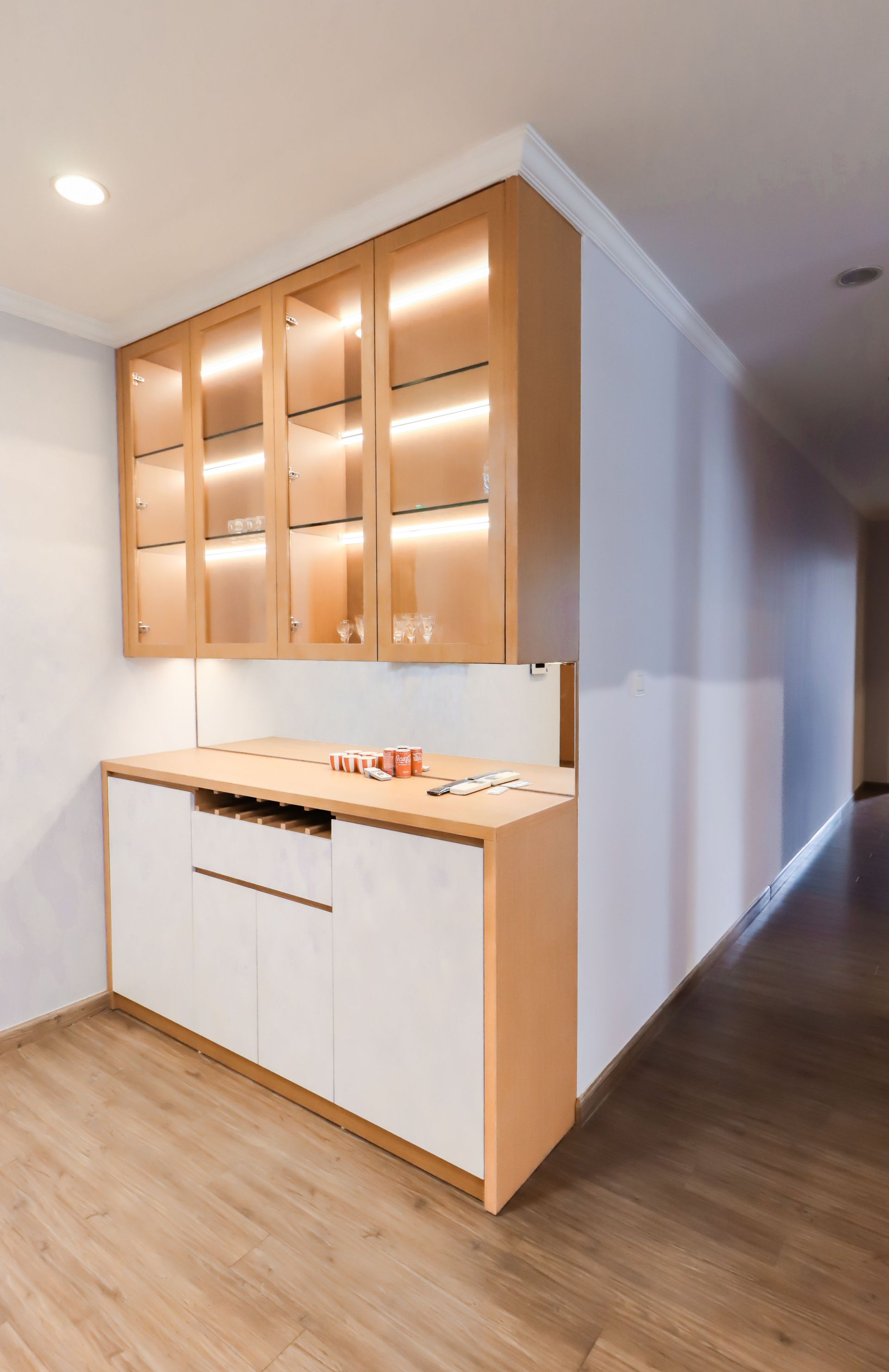
After refinishing completes, cabinets show consistent color across all doors and frames, smooth surfaces without visible brush marks or drips, and durable finishes that resist moisture and grease without showing wear around handles or edges. You notice doors and drawers match each other in sheen and tone, and the finish feels smooth without rough patches or raised grain. The varnish topcoat creates a hard, wipeable surface that withstands daily kitchen use and cleaning without dulling or scratching as quickly as the previous finish.
Cabinet refinishing addresses finish wear and appearance but doesn't repair broken hinges, damaged drawer slides, or structural issues like warped doors or loose joints. Those repairs require separate attention before refinishing begins to ensure hardware functions properly and surfaces accept new finishes evenly.
Common Questions About This Service
Homeowners considering cabinet work often ask about process details, timing, and cost comparisons to replacement.
How does cabinet refinishing differ from replacing cabinetry entirely?
Refinishing preserves existing cabinet boxes, frames, and door structures while updating only the visible finish. Replacement involves removing and disposing of old cabinets, installing new boxes and hardware, and often requires plumbing or electrical work. Refinishing typically costs 30 to 50 percent of replacement costs and completes in days rather than weeks.
What does the stripping and prep process involve for kitchen cabinets?
Stripping removes old paint, stain, or varnish using chemical strippers or mechanical methods, exposing bare wood. Prep includes sanding to smooth surfaces and remove residue, filling dents or scratches with wood filler, and cleaning to remove dust and contaminants. This step determines how well new finishes adhere and how smooth the final surface appears.
Why do Utah homes refinish cabinets before resale?
Updated cabinet finishes increase perceived kitchen value without the cost of full remodels, appealing to buyers who want move-in-ready homes. Neutral stains or paint colors broaden buyer appeal, and fresh finishes suggest well-maintained properties. Refinishing costs less than replacement while delivering similar visual impact during showings and inspections.
How long does varnish or polyurethane protect refinished cabinets?
Quality topcoats resist moisture, grease, and daily contact for seven to ten years in typical kitchen use before showing significant wear. High-contact areas like handles and edges may show dulling sooner, but the finish remains intact and protective. Proper application ensures even coverage that doesn't chip or peel at corners and seams.
When should I refinish cabinets instead of painting walls or updating hardware?
Refinishing makes sense when cabinet boxes remain structurally sound but finishes show visible wear, discoloration, or damage. If you want to change cabinet color or update style without replacing layouts, refinishing delivers the change at lower cost. Updating hardware alone doesn't address finish wear, and painting walls doesn't hide cabinet damage or outdated stain colors.
East Bench Painting offers standalone cabinet service as an alternative to new cabinetry investment, addressing finish wear while preserving existing layouts and functionality. Schedule a kitchen evaluation to assess refinishing options and compare costs to replacement.